- HOME
- fishing rods
-
fishing
add remove
- underwater add remove
-
Nautical
add remove
- promotions
- Brands
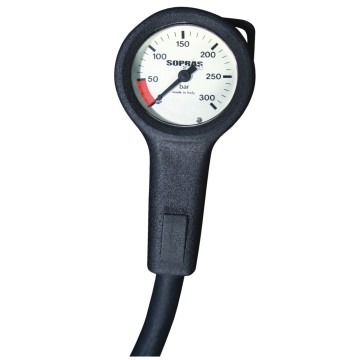
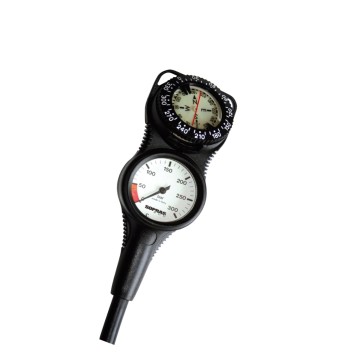
Combo 2 300 bar Manometro + profondimetro soprassub
Reference:
€149.00
Tax included
Security policy
(edit with the Customer Reassurance module)
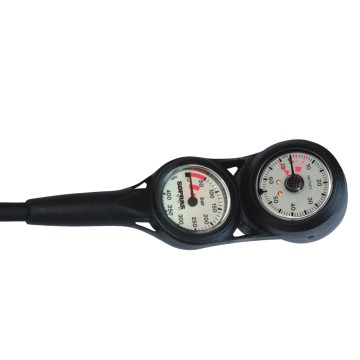
Combo 2 300bar suprassub
Pressure gauge in bars and depth gauge in meters
300bar, 80m
The use of a pressure gauge and depth gauge is critical for diving safety and planning. Here is some key information on how to use them effectively:
Manometer
- Function: Measures the residual air pressure in your tank. It is essential for knowing how long you can stay underwater without risking running out of air.
- Readings: Be sure to check the pressure gauge frequently. Generally, it is advisable not to go below a safe level (often around 50 bar) to ensure a safe ascent.
Depth gauge
- Function: Indicates the current depth of your dive, which is essential for monitoring time at different depths and preventing problems such as nitrogen narcosis or decompression sickness.
- Readings: Check the depth gauge regularly to maintain your desired depth and to comply with diving safety limits.
Dive planning
- Calculate times: Use dive tables or dive computers to plan dive times based on depth.
- Safety Signals: Establish clear signals with your dive buddy to communicate any ascent needs or problems.
- Continuous monitoring: Check both the pressure gauge and depth gauge regularly during the dive to avoid surprises.
Ascent
- Ascend slowly, generally no more than 9-10 meters per minute, to allow your body to adjust to the decrease in pressure and to avoid the formation of nitrogen bubbles in your blood.
Final considerations
Using a pressure gauge and depth gauge correctly helps ensure safer and more enjoyable dives. It is always advisable to take certified training courses to learn more about these techniques and learn how to use the equipment properly. If you have any specific questions or would like to learn more about any aspect, please ask!
ART. 531400
16 other products in the same category:
MARES ABYSS 52 - 1 + 2 stage
Pesca&Sub,
5/
5
<p><strong>Diving regulator</strong></p>
<p>The Mares Abyss 22 regulator has achieved stardom because of its reliability, proven by many dive records.<br>The solidity of tradition has evolved through new design and engineering: more metal, more performance, more safety.<br>Technologies of the Mares Abyss 22 regulator:<br>- "Tri-material" valve, in three materials (brass, soft polyurethane and "high strength" polyurethane), present today on all Mares first stages MRT version</br>.<br>This innovative technical solution guarantees Mares first stages maximum performance, safety and durability-<br>all-metal second stage case, made of nickel-plated and corrosion-resistant chrome-plated brass</br>.<br>In cold water, metal second stages have superior and safer performance than second stages made of plastic materials, thanks to the high thermal conductivity that limits the freezing effect-<br>Dynamic Flow Control system, which makes it possible to minimize the drop in intermediate pressure during inspiration, thus clearly improving regulator performance in any situation, even in extreme conditions</br>.</br></br></br></br></p>
In Stock
Price
€399.00
Availability: 5 In Stock
- Scuba diving equipment
- Abyss regulator
Availability: 40 In Stock
ARTICLE CODE: 6202
Availability: 30 In Stock
Combo 2 5000 PSI Manometro + profondimetro...
Pesca&Sub,
5/
5
<p class="tm6"><strong><span class="tm7">Combo 2 5000 PSI Manometer + depth gauge overssub</span></strong></p>
<p class="tm6"><span class="tm7">Pressure gauge in PSI and depth gauge in feet.<br>5000PSI, 230 feet</span></p>
<p class="tm6"><span class="tm8"> </span></p>
<p class="tm6"><span class="tm8">The use of a pressure gauge and depth gauge is critical for diving safety and planning. Here is some key information on how to use them effectively:</span></p>
<h3 class="tm5"><strong><span class="tm9">Manometer</span></strong></h3>
<ul class="tm11">
<li class="tm12"><span class="tm8"></span><strong><span class="tm13">Function</span></strong><span class="tm8">: Measures the residual air pressure in your tank. It is essential for knowing how long you can stay underwater without risking running out of air.</span></li>
<li class="tm14"><span class="tm8"></span><strong><span class="tm13">Readings</span></strong><span class="tm8">: Be sure to check the pressure gauge frequently. Generally, it is advisable not to go below a safe level (often around 50 bar) to ensure a safe ascent.</span></li>
</ul>
<h3><strong><span class="tm9">Depth gauge</span></strong></h3>
<ul class="tm11">
<li class="tm12"><span class="tm8"></span><strong><span class="tm13">Function</span></strong><span class="tm8">: Indicates the current depth of your dive, which is essential for monitoring time at different depths and preventing problems such as nitrogen narcosis or decompression sickness.</span></li>
<li class="tm14"><span class="tm8"></span><strong><span class="tm13">Readings</span></strong><span class="tm8">: Check the depth gauge regularly to maintain your desired depth and to comply with diving safety limits.</span></li>
</ul>
<h3><strong><span class="tm9">Dive planning</span></strong></h3>
<ol class="tm6">
<li class="tm12"><span class="tm8"></span><strong><span class="tm13">Calculate times</span></strong><span class="tm8">: Use dive tables or dive computers to plan dive times based on depth.</span></li>
<li class="tm14"><span class="tm8"></span><strong><span class="tm13">Safety Signals</span></strong><span class="tm8">: Establish clear signals with your dive buddy to communicate any ascent needs or problems.</span></li>
<li class="tm14"><span class="tm8"></span><strong><span class="tm13">Continuous monitoring</span></strong><span class="tm8">: Check both the pressure gauge and depth gauge regularly during the dive to avoid surprises.</span></li>
</ol>
<h3><strong><span class="tm9">Ascent</span></strong></h3>
<ul class="tm11">
<li class="tm12"><span class="tm8">Ascend slowly, generally no more than 9-10 meters per minute, to allow your body to adjust to the decrease in pressure and to avoid the formation of nitrogen bubbles in your blood.</span></li>
</ul>
<h3><strong><span class="tm9">Final considerations</span></strong></h3>
<p class="tm6"><span class="tm8">Using a pressure gauge and depth gauge correctly helps ensure safer and more enjoyable dives. It is always advisable to take certified training courses to learn more about these techniques and learn how to use the equipment properly. If you have any specific questions or would like to learn more about any aspect, please ask!</span></p>
<p class="Normale"><strong><span class="tm5">ART. 531401</span></strong></p>
In Stock
Price
€149.90
Availability: 30 In Stock
- Manometer + depth gauge for scuba diving
- Diving equipment and accessories
Availability: 25 In Stock
Combo 2 compass thermo 5000 PSI Manometer +...
Pesca&Sub,
5/
5
<h1 class="tm7"><strong>Combo 2 compass thermo 5000 PSI Manometer + Compass And Thermometer Suprassub</strong></h1>
<h1 class="tm7"></h1>
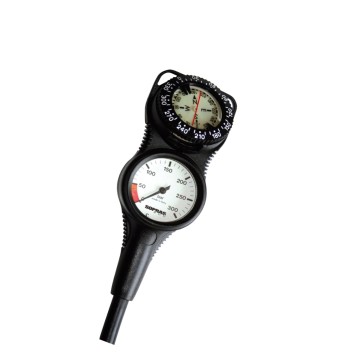
<p class="tm9"><span class="tm10">PSI manometer, thermometer and compass.<br>5000PSI</span></p>
<p class="Normale" style="box-sizing: inherit; margin: 0px; font-size: 14px; color: #2b2626; font-family: 'Open Sans', sans-serif; background-color: #ffffff;">Using a pressure gauge, compass, and thermometer while scuba diving is critical to ensure safety and optimize the experience. Here is how each instrument contributes to diving:</p>
<p class="Normale" style="box-sizing: inherit; margin: 0px; font-size: 14px; color: #2b2626; font-family: 'Open Sans', sans-serif; background-color: #ffffff;"></p>
<p class="Normale" style="box-sizing: inherit; margin: 0px; font-size: 14px; color: #2b2626; font-family: 'Open Sans', sans-serif; background-color: #ffffff;"><span style="box-sizing: inherit; font-weight: 600;">Manometer</span></p>
<p class="Normale" style="box-sizing: inherit; margin: 0px; font-size: 14px; color: #2b2626; font-family: 'Open Sans', sans-serif; background-color: #ffffff;">Air Monitor: It measures the residual pressure in the tank, allowing you to know how long you can stay underwater. Check the gauge frequently to avoid running out of air.</p>
<p class="Normale" style="box-sizing: inherit; margin: 0px; font-size: 14px; color: #2b2626; font-family: 'Open Sans', sans-serif; background-color: #ffffff;">Ascent planning: Using the gauge readings, plan when to start ascending, making sure you have enough air to complete the ascent.</p>
<p class="Normale" style="box-sizing: inherit; margin: 0px; font-size: 14px; color: #2b2626; font-family: 'Open Sans', sans-serif; background-color: #ffffff;"><span style="box-sizing: inherit; font-weight: 600;">Compass</span></p>
<p class="Normale" style="box-sizing: inherit; margin: 0px; font-size: 14px; color: #2b2626; font-family: 'Open Sans', sans-serif; background-color: #ffffff;">Orientation: Helps you maintain direction while diving. It is especially useful in environments with poor visibility or currents.</p>
<p class="Normale" style="box-sizing: inherit; margin: 0px; font-size: 14px; color: #2b2626; font-family: 'Open Sans', sans-serif; background-color: #ffffff;">Navigation: You can plan a specific route before the dive and follow the desired direction, making it easier to return to your starting point.</p>
<p class="Normale" style="box-sizing: inherit; margin: 0px; font-size: 14px; color: #2b2626; font-family: 'Open Sans', sans-serif; background-color: #ffffff;"><span style="box-sizing: inherit; font-weight: 600;">Thermometer</span></p>
<p class="Normale" style="box-sizing: inherit; margin: 0px; font-size: 14px; color: #2b2626; font-family: 'Open Sans', sans-serif; background-color: #ffffff;">Checking water temperature: Measures water temperature, which can influence your diving decision. Lower temperatures may require a heavier wetsuit or proper cold weather preparation.</p>
<p class="Normale" style="box-sizing: inherit; margin: 0px; font-size: 14px; color: #2b2626; font-family: 'Open Sans', sans-serif; background-color: #ffffff;">Condition monitoring: Knowing the temperature can help you assess any changes in marine life behavior and better plan future dives.</p>
<p class="Normale" style="box-sizing: inherit; margin: 0px; font-size: 14px; color: #2b2626; font-family: 'Open Sans', sans-serif; background-color: #ffffff;">Combined use of pressure gauge, compass and thermometer</p>
<p class="Normale" style="box-sizing: inherit; margin: 0px; font-size: 14px; color: #2b2626; font-family: 'Open Sans', sans-serif; background-color: #ffffff;">Dive planning:</p>
<p class="Normale" style="box-sizing: inherit; margin: 0px; font-size: 14px; color: #2b2626; font-family: 'Open Sans', sans-serif; background-color: #ffffff;"></p>
<p class="Normale" style="box-sizing: inherit; margin: 0px; font-size: 14px; color: #2b2626; font-family: 'Open Sans', sans-serif; background-color: #ffffff;">Check the pressure gauge to make sure you have enough air.</p>
<p class="Normale" style="box-sizing: inherit; margin: 0px; font-size: 14px; color: #2b2626; font-family: 'Open Sans', sans-serif; background-color: #ffffff;">Use the compass to establish a clear path.</p>
<p class="Normale" style="box-sizing: inherit; margin: 0px; font-size: 14px; color: #2b2626; font-family: 'Open Sans', sans-serif; background-color: #ffffff;">Check the water temperature to decide what equipment to wear.</p>
<p class="Normale" style="box-sizing: inherit; margin: 0px; font-size: 14px; color: #2b2626; font-family: 'Open Sans', sans-serif; background-color: #ffffff;">During the dive:</p>
<p class="Normale" style="box-sizing: inherit; margin: 0px; font-size: 14px; color: #2b2626; font-family: 'Open Sans', sans-serif; background-color: #ffffff;"></p>
<p class="Normale" style="box-sizing: inherit; margin: 0px; font-size: 14px; color: #2b2626; font-family: 'Open Sans', sans-serif; background-color: #ffffff;">Check the pressure gauge regularly to monitor air consumption.</p>
<p class="Normale" style="box-sizing: inherit; margin: 0px; font-size: 14px; color: #2b2626; font-family: 'Open Sans', sans-serif; background-color: #ffffff;">Use the compass to maintain the desired direction and make adjustments if necessary.</p>
<p class="Normale" style="box-sizing: inherit; margin: 0px; font-size: 14px; color: #2b2626; font-family: 'Open Sans', sans-serif; background-color: #ffffff;">Monitor water temperature, noting any significant changes.</p>
<p class="Normale" style="box-sizing: inherit; margin: 0px; font-size: 14px; color: #2b2626; font-family: 'Open Sans', sans-serif; background-color: #ffffff;">Return and ascent:</p>
<p class="Normale" style="box-sizing: inherit; margin: 0px; font-size: 14px; color: #2b2626; font-family: 'Open Sans', sans-serif; background-color: #ffffff;"></p>
<p class="Normale" style="box-sizing: inherit; margin: 0px; font-size: 14px; color: #2b2626; font-family: 'Open Sans', sans-serif; background-color: #ffffff;">Use the compass to orient yourself during the return to the entry point.</p>
<p class="Normale" style="box-sizing: inherit; margin: 0px; font-size: 14px; color: #2b2626; font-family: 'Open Sans', sans-serif; background-color: #ffffff;">Make sure you have enough air for the ascent and follow safety practices.</p>
<p class="Normale" style="box-sizing: inherit; margin: 0px; font-size: 14px; color: #2b2626; font-family: 'Open Sans', sans-serif; background-color: #ffffff;">Final Considerations</p>
<p class="Normale" style="box-sizing: inherit; margin: 0px; font-size: 14px; color: #2b2626; font-family: 'Open Sans', sans-serif; background-color: #ffffff;">Training: You should take specific courses to learn the proper use of these tools and improve your skills.</p>
<p class="Normale" style="box-sizing: inherit; margin: 0px; font-size: 14px; color: #2b2626; font-family: 'Open Sans', sans-serif; background-color: #ffffff;">Practice: Practice in controlled environments to familiarize yourself with the simultaneous use of a pressure gauge, compass and thermometer.</p>
<p class="tm9"><span class="tm10"></span></p>
<p class="Normale" style="box-sizing: inherit; margin: 0px; font-size: 14px; color: #2b2626; font-family: 'Open Sans', sans-serif; background-color: #ffffff;">If you have further questions or would like to discuss any aspect in more detail, please do not hesitate to ask!</p>
<p class="tm9"><span class="tm11"> </span></p>
<p class="Normale"><span class="tm11"> </span></p>
<p class="Normale"></p>
<p class="Normale"><strong><span class="tm12">ART. 535311</span></strong></p>

In Stock
Price
€149.00
Availability: 30 In Stock
Combo 2 compass 5000 PSI Manometro + Bussola...
Pesca&Sub,
5/
5
<h2><strong>Combo 2 compass 5000 PSI Manometer + Compass overssub</strong></h2>
<p></p>
<p><strong>PSI pressure gauge and compass.</strong></p>
<p>5000PSI</p>
<p></p>
<p>Using a pressure gauge and compass while scuba diving is essential to ensure safety and orientation. Here is how they can be used together:</p>
<p></p>
<p><strong>Manometer</strong></p>
<p>Air monitor: Keeps track of the residual pressure in the air tank. Check it regularly to avoid running out of air.</p>
<p>Ascent planning: Knowing the pressure helps you plan when to start your ascent and ensure you always have enough air to safely return to the surface.</p>
<p><strong></strong></p>
<p><strong>Compass</strong></p>
<p>Orientation: It allows you to maintain direction while diving, especially in low visibility conditions or complex underwater environments.</p>
<p>Route Planning: Before you dive, you can determine the direction you want to go and use the compass to follow it.</p>
<p>Combined use of pressure gauge and compass</p>
<p>Dive planning:</p>
<p></p>
<p>Before diving, check the pressure gauge to make sure you have enough air and plan your route using the compass.</p>
<p>During the dive:</p>
<p></p>
<p>Check the pressure gauge regularly to monitor air consumption.</p>
<p>Use the compass to orient yourself. You can mark visual landmarks (if available) or follow a specific course.</p>
<p>Return to base:</p>
<p></p>
<p>On the way back, use your compass to follow the opposite course and make sure you have enough air for a safe ascent.</p>
<p>Final Considerations</p>
<p><strong>Practice</strong>: It is helpful to practice using the compass in shallow water before taking on deeper or more complex dives.</p>
<p>Training courses: Participating in underwater navigation courses will provide you with the skills you need to effectively use a pressure gauge and compass.</p>
<p>If you need more details or have specific questions, let me know!</p>
<p></p>
<p><strong>ART. 535301</strong></p>
In Stock
Price
€144.90
Availability: 30 In Stock