


Reference:
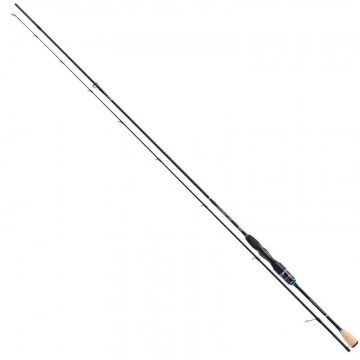
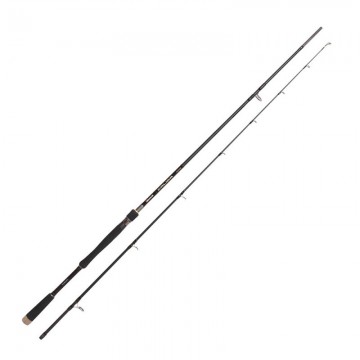
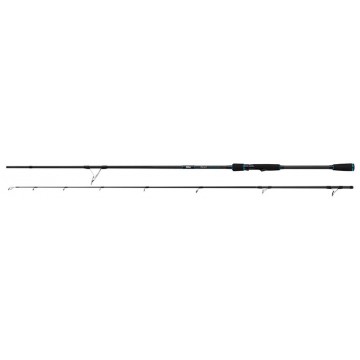
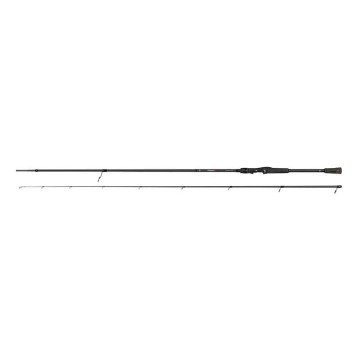
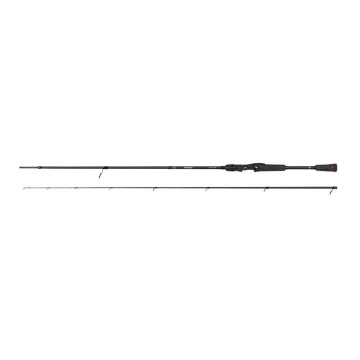
Lunghezza 6'6''- 2.00 m - Grammatura 14-80 g
Lunghezza 6'6''- 2.00 m - Grammatura 28-120 g
Lunghezza 5'10" - 1.75m. - Grammatura 40-160 g

 Security policy
(edit with the Customer Reassurance module)
 Delivery policy
(edit with the Customer Reassurance module)
 Return policy
(edit with the Customer Reassurance module)
When we talk about fishing from the boat, a question that is often asked is: is there a technique versatile and easily manageable, regardless of the type of boat you have, to be able to practice wherever you arrive regardless of knowledge of the seabed? The answer is yes.
The light jigging, a "light" version of the famous vertical, with its colorful artificial and space-saving and its light rods and often "gavonable," it represents the ideal solution in terms of practicality and of speed of execution, allowing respectable catches and often surprising results.
LIGHT JIGGING, KABURA, INCHIKU: THREE ARTIFICIALS, THREE TECHNIQUES TO PRACTICE
If true, all three techniques have as their common denominator the vertical descent and retrieval of bait and the boat strictly in a drift, it is equally true that different names correspond to different three different animation techniques, dictated essentially, by the hydrodynamic nature of the artificials used.
In light jigging, they use artificials identical to those used in vertical, but in versions with lighter weight. The artificial does most of the work during the descent, sparking and creating sudden turbulence; once it reaches the bottom, you will begin a cadenced recovery interspersed with moments of stop, during which the attack will often take place. Most important is shoeing vigorously and pull without ever stopping; in fact, fish often lure on the outside of the mouth and therefore dislodgements are frequent.
The kabura instead represents the solution ideal for those who do not feel like giving animation to artificial. This bait in fact consists of a leaded head and numerous rubber "tails" combined with two silicone tentacles and two hooks generally mounted on thin string.
The leader is generally connected by a snap or knot to the head of the lure, so that once the bottom is reached, all that is needed is to "bounce" the lure, thus achieving the movement of the tails and tentacles. The different shapes of the head significantly vary the rate of descent and presentation of the bait on the bottom. The kabura can be enriched with strips of squid, preferably fresh, beaten expertly with a meat-beating hammer, thus increasing its catching power
L'inchiku, represents perhaps the more complex technique. This bait consists of a lead-carrier generally triangular in shape and an octopus tied to it with a sturdy piece of dynema. Once the bait has been made to reach the bottom, the animation will be given with bottom-up movements of the rod (jerkate), combined with synchronized retrieves with the reel. The bait will have to make some small descents and then rise again, like an octopus on the run.
Once you become familiar with the animation the catches will not be long in coming, repaying you for your efforts. As with kabura, inchiku can be enriched with squid strips on the bait.
THE SPOTS
By fishing in a cast-off, it is possible to explore vast fishing grounds, starting in rocky crevices and ending on posidonia meadows or even on mud near the ledges. Since generally, with this technique, fish attack more out of territoriality than attraction to possible prey, all bottoms can hold surprises.
Snappers and bream, in fact, have been wounded in areas where they were not thought to be, while habitual fish such as weevils and pagelli provided moments of pure enjoyment as they were undermined with ultra-light equipment.
THE EQUIPMENT
Considering the need to maneuver the bait vertically with the boat drifting and the really small weights of the baits used, it will be wise to stick to a few rules; in general, improvisation will never lead to good results.
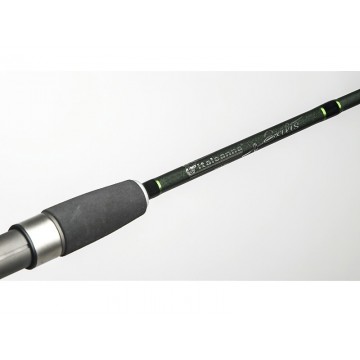
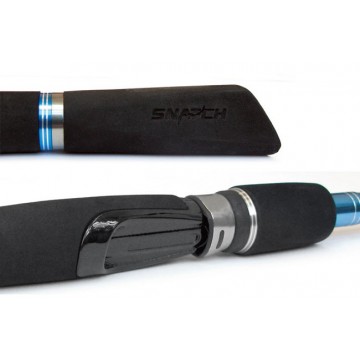
The rods will be specific for this type of fishing, strictly with rings treated for use, with dynema (preferably with stone in SCI) and with a very sensitive cymbal that allows the artificial to be animated, the drum will, however, have ahigh power reserve also allowing us to deal with possible encounters with grouper, bream and snapper.
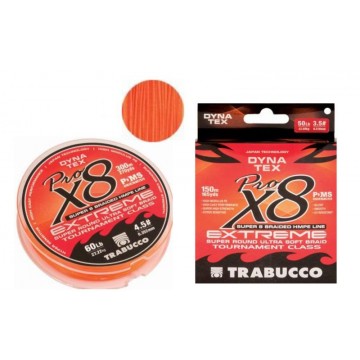
I reels, better if rotating, will need to contain at least 150/170 meters of dynema. Needless to say, given the stresses to which they will be subjected, it will be advisable to purchase models with a strong clutch and free of any accessories that could wear out quickly.
To the coiled dynema, we will apply a piece of fluorcarbon which will act as a shock leader, with breaking strength slightly higher than that of the dynema itself, the connection between the artificial and leader will instead be made with a spinning or specific light jigging snap, of at least 70 lbs.
Given the same breaking strength, the following will be preferred thinner dynema, able to sink faster and suffer less from the current.
The following should not be missing on board floating anchors, to brake the boat in case of exaggerated wind or current.
The ability to target a wide variety of prey, coupled with the ease of carrying equipment, makes light jigging a versatile and viable technique throughout the year An off-set rod and a box of artificials can always be kept on board, and at any time it will be possible to spend healthy hours of fun.
Speaking of seasons, the reference also goes to age. Having to animate light artificials in current, in fact, no special physical skills are required, so this technique manages to embrace adults and children alike, pleasing both novices and veterans and sometimes giving catches worthy of far more demanding techniques.
| CODE | MODEL | LENGTH | OVERVIEW | SECTIONS | LURE WT | LINE TEST | NO. RINGS | RINGS |
|---|---|---|---|---|---|---|---|---|
| 166-65-100 | LTJ662 | 6'6"-2.00 m | 148 cm | 1+1 | 14-80 g | 0.6 - 1.5 | 12 | SiC |
| 166-65-200 | LTJ662 | 6'6"-2.00 m | 148 cm | 1+1 | 28-120 g | 0.8 - 2.0 | 12 | SiC |
| 166-65-300 | LTJ512 | 5'10"-1.75 m | 131 cm | 1+1 | 40-160 g | 1.0 - 3.0 | 12 | SiC |
PRICES
ART. 166-65-100 - PRICE € 79.00
ART. 166-65-200 - PRICE € 79.00
ART. 166-65-300 - PRICE € 79.00

Lunghezza 6'6''- 2.00 m - Grammatura 14-80 g
Lunghezza 6'6''- 2.00 m - Grammatura 28-120 g
Lunghezza 5'10" - 1.75m. - Grammatura 40-160 g
Length 1.83 m. - LOW AVAILABILITY (PLEASE CONTACT BEFORE PLACING YOUR ORDER)
Lunghezza 2.40 - C.W 10-30g.
Length 7' - 2.10" - C.W 20-50g - LOW AVAILABILITY (CONTACT BEFORE ORDERING)
Lunghezza 2,40 - Getto del peso 20/60 gr.
Lunghezza 6'4''- 1.94 m. - 6/8 Lb
Lunghezza 6'8" - 2.03 m. - 8-10 Lb
Lunghezza 6'8" - 2.03 m. - 8-14 Lb
Lunghezza 2,20 - 10/30 gr.
Lunghezza 1,91 - 2/10 g.
Lunghezza 3.00m - C.W 20-50 g
Length 2.60 - Power 10-30 gr.
Length 2.60 - Power 30-80 gr.
COMING SOON (PLEASE CONTACT BEFORE PLACING YOUR ORDER)